Product Design vs. UX Design
UX design makes an interface usable. Product design decides what the interface should be. A UX designer improves the flow through an existing product; a product designer also shapes the problem, the concept, and the tradeoffs behind it – which is why the two roles command different pay, different scopes, and different risk if you hire the wrong one. Every job board, freelance site, and design agency website uses these terms interchangeably: UX designer, product designer, product UX designer. They sound like the same role. They’re not. Understanding the difference could save you $50K in unnecessary work – or cost you $100K if you hire the wrong person for what you’re actually trying to do.
What UX Design Actually Is
UX design is the discipline of making interfaces usable. It’s about information architecture, user flows, task completion, accessibility, and reducing friction. A UX designer looks at how people interact with your product and asks: Can they find what they need? Can they complete tasks efficiently? Does the interface make sense?
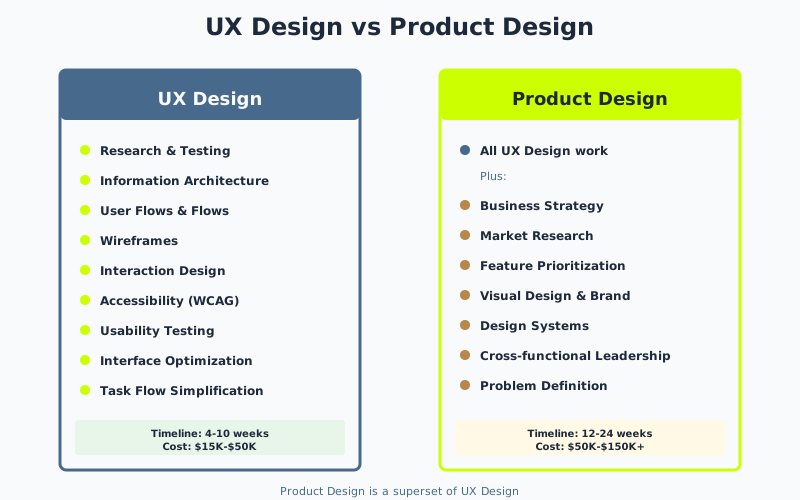
The UX designer’s focus:
- Information architecture (how content and features are organized)
- User flows and navigation (how users move through the product)
- Interaction design (how buttons respond, how errors are communicated)
- Usability testing and validation
- Accessibility compliance (WCAG standards, keyboard navigation, screen readers)
- Wireframes and low-to-medium fidelity designs
What UX designers don’t do:
- Strategic business decisions (which features to build, which markets to pursue)
- Visual branding or aesthetics (what the product looks like, color choice, typography) – that work belongs to a UI designer
- Product roadmap prioritization
- Full-stack product specification (they spec the interface, not the backend architecture)
Typical UX project scope: Redesigning an existing interface, optimizing a user flow, improving accessibility, or fixing a navigation problem.
Timeline: 4–10 weeks depending on scope.
Cost range: $15K–$50K for a discrete UX project. If this scope is what you need, the full hiring playbook – rates, evaluation, and red flags – is in how to hire a UX designer.
Key Signal
If you hire a UX designer and they spend the first month asking "What are we actually trying to build?" and "What problem does this solve?" – that's a product designer thinking, not a UX designer. Both are valuable. They're different roles.
What Product Design Actually Is
Product design is broader. It starts with strategy and business goals, then designs the product (and the organization) to achieve them. A product designer asks: What are we building? Why? Who are we building for? What does success look like? Then they design the thing.
Product design includes UX, but it also includes strategy:
The product designer’s focus:
- Business strategy and goals (which features matter, which don’t, what the revenue model looks like)
- Market and user research (who are we building for, what do they need, competitive landscape)
- Problem definition (what problem are we actually solving, is it worth solving)
- Feature prioritization and roadmap influence (which gets built first, which doesn’t get built)
- User research, validation, and testing (measuring whether solutions work)
- Full product vision (not just the interface, but the entire customer experience)
- Interaction design and flows
- Visual design and brand expression
- Often, leading the AI, UX, and software team through the entire product process
What product designers don’t do (usually):
- Code the product
- Make solo business decisions (that’s the executive team)
- Design the database or backend architecture (that’s the architect)
- Handle marketing or go-to-market strategy (though they’ll influence it)
Typical product design project scope: Building a new product, overhauling a struggling product, transitioning from founder-led product to design-led product, or leading a cross-functional team through a major evolution.
Timeline: 12–24 weeks (includes research, validation, design, and handoff to development).
Cost range: $50K–$150K+ depending on team composition and project complexity.
Questions to Ask
Does this person ask about our business goals and success metrics, or do they jump straight to sketching interfaces? Do they do research, or do they design from assumptions? Are they designing the interface, or designing the entire product experience?
When You Need Only UX Design
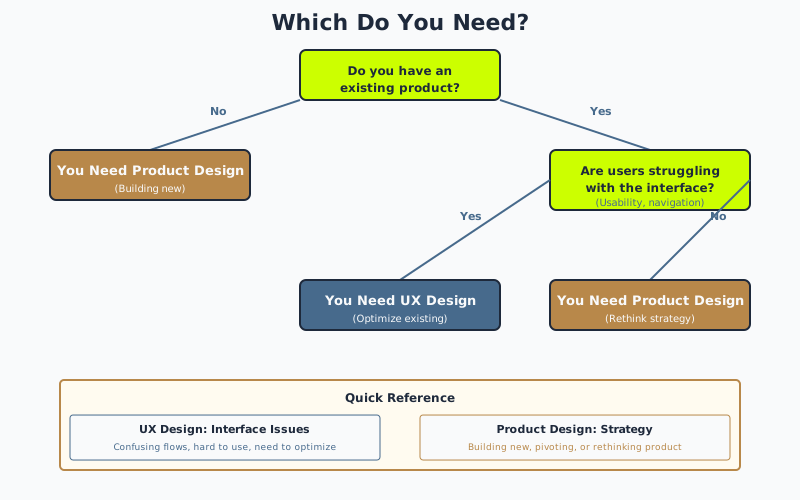
Decision path:
- Do you have an existing product?
- No → You need Product Design (building new)
- Yes → Are users struggling with the interface (usability, navigation)?
- Yes → You need UX Design (optimize existing)
- No → You need Product Design (rethink strategy)
| Hire | When |
|---|---|
| UX Design | Interface issues – confusing flows, hard to use, need to optimize |
| Product Design | Strategy – building new, pivoting, or rethinking product |
You need a UX designer (not a product designer) when:
Your problem is specifically about interface usability. You have a working product. Users can accomplish their goals, but it’s clunky, confusing, or inefficient. Your analytics show people are dropping off at specific points. You want to improve the experience without changing what the product fundamentally does.
Example: Your SaaS product works fine, but reporting is hard to understand. Customers ask how to use it. You need a UX designer to restructure the interface, improve labeling, and streamline the navigation. You don’t need to rethink whether reporting is the right feature.
You’re adding a new feature to an existing product. You already have product direction. Now you need to design how this specific feature works within the existing system. A UX designer can handle this – they’ll think about how the new feature fits the existing flows, whether the navigation changes, whether any existing patterns conflict.
Example: Your product has user accounts. Now you want to add team collaboration. A UX designer can design the feature within your existing patterns. They don’t need to rethink your entire strategy.
You need accessibility improvements. You have a product that works but doesn’t meet WCAG accessibility standards. A UX specialist with accessibility expertise can audit, recommend changes, and oversee implementation. This is pure UX work – making sure the interface is usable for everyone.
You’re optimizing existing flows. Your analytics show users take 4 clicks to do something that should take 2 clicks. A UX designer can streamline the flow and test the change. You’re not changing the feature; you’re making it faster.
Cost reality: UX-only projects are typically $15K–$50K. They’re shorter, more focused, and require less exploratory work. If you’re quoting yourself $100K for a UX project, you probably need a product designer, not a UX designer.
Common Failure Mode
You hire a UX designer to "redesign the product," but you haven't decided what the product is. The designer asks clarifying questions and you get frustrated ("Just make it better!"). The result is a redesign that's prettier but doesn't address the actual problem.
When You Need Product Design
You need a product designer (not just UX) when:
You’re building something new. You have an idea but no clear direction. You need someone to help you think through who you’re building for, what they actually need, what the simplest viable version looks like, and how to validate your assumptions. That’s product design work.
Your product is struggling and you don’t know why. Users aren’t adopting it. Retention is low. You’re losing money. This could be a UX problem, but it’s probably a product problem – you’re solving the wrong problem, or you’re solving the right problem for the wrong people, or you’re overcomplicating the solution. A product designer investigates and fixes the root cause.
You’re pivoting or evolving your business model. You launched with one model and now you want to try another. You need to redesign how customers interact with your product, what features matter, what the pricing structure is, what the onboarding looks like. This is product design, not UX.
Example: You built a desktop software tool. Now you want to go cloud-based. You need a product designer to rethink the experience, the pricing, the onboarding, the collaboration model. This isn’t just a UX redesign; it’s a fundamental product rethink.
You’re scaling from founder-led to team-led product. You’ve been making all the product decisions. Now you’re hiring a team and you need someone who can think strategically about the roadmap, prioritization, and long-term vision. That’s a product design role.
You’re building something complex with multiple user types. You have customers, admins, developers, and end-users, each with different needs and workflows. A product designer thinks through how these different personas interact with the system and ensures everything works together coherently.
Cost reality: Product design projects are $50K–$150K+ because they take longer and involve more exploration. If your project budget is under $50K, you probably don’t need a full product designer – you need a UX designer or a lighter-weight product person.
Key Signal
A product designer will spend 2–3 weeks doing research and asking questions before any design happens. If you need designs in 1 week, you need a UX designer or a very experienced designer working in a familiar domain.
When You Need Both
Integrated Product and UX Design Teams
The best products have both disciplines working together:
UX designers own the interface – how the product actually works, task flows, accessibility, interaction design, and detailed specifications for developers.
Product designers own the vision – strategy, business goals, user research, feature prioritization, and ensuring AI, UX, and software are aligned.
In practice, the best companies have:
- A product designer (or head of product) setting direction
- UX designers executing that direction with depth and rigor
- An AI/UX/software team building it all together
On smaller teams, you might have one person doing both (a “product UX designer”). That works if the person has both skill sets and you’re clear on which hat they’re wearing in any given moment.
On very small teams or startups with no budget, you might have a designer doing everything. That’s fine – just be aware that they’re stretching across two disciplines.
How to Hire for Each Role
Hiring a UX designer:
- Portfolio should show detailed wireframes, user flows, and interface work
- Ask about their process for understanding existing constraints
- Look for evidence of testing and validation (not just beautiful designs)
- They should ask about your users and their goals
Hiring a product designer:
- Portfolio should show the full journey from idea to built product
- Ask about business outcomes (did the product work? Did it succeed?)
- Look for evidence of research, strategy, and discovery work
- They should ask about your business goals, success metrics, and the problem you’re solving
- They should be comfortable talking about roadmap, prioritization, and tradeoffs
Red flags for both:
- Portfolio is all pretty mockups with no context
- They jump to solutions without understanding the problem
- They can’t explain why they made specific design decisions
- They can’t discuss the business context of their work
Related Guides
Frequently Asked Questions
What's the difference between product design and UX design?
UX design makes an interface usable; product design decides what the interface should be. UX optimizes the flow through an existing product. Product design also shapes the problem, the concept, and the tradeoffs behind it.
Which one do I need for my project?
Hire a UX designer when you know what the product is and need to improve it. Hire a product designer when the product concept itself is up for debate and you need someone to help shape it.
Do product designers do UX research?
Yes, but at shallower depth than dedicated researchers. A product designer will run usability tests and interview users. For quantitative research or large-sample studies, hire a UX researcher alongside.
How much do product designers and UX designers cost?
UX designers: $80–$180/hour contract, $90,000–$160,000 salary. Product designers: $150–$300/hour contract, $130,000–$220,000 salary. The overlap is wide; titles alone don't tell you skill level.
Is a UI/UX designer the same as a product designer?
Not necessarily. 'UI/UX' usually means visual and interaction design. 'Product designer' usually includes those plus problem framing and strategy. Read the portfolio – titles are used inconsistently.
Can one person do both roles?
Yes, and many senior designers do. The risk is skewed output: most hybrid designers lean heavily toward one discipline. For complex products, two focused designers outperform one generalist.